
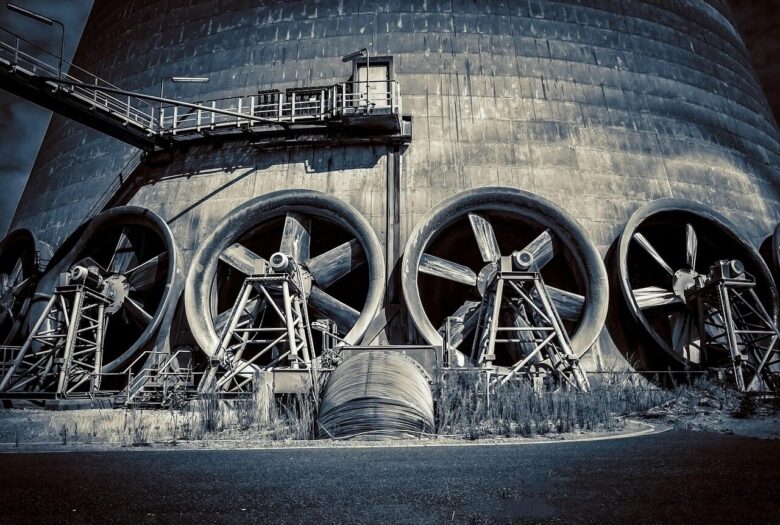
Resolving compliance gaps in industrial ventilation and air quality starts with understanding where the workplace is failing to control airborne risks, not just whether fans are running or filters were replaced recently. In industrial environments, ventilation affects worker comfort, contaminant exposure, equipment reliability, fire risk, humidity control, and regulatory readiness.
A compliance gap can appear when the written safety program says one thing, but the actual ventilation system, maintenance records, air monitoring results, or worker complaints show something different. In many cases, the problem is not one major failure. It is a combination of weak documentation, poor airflow balance, outdated inspections, missing exposure data, and unclear responsibilities between safety, maintenance, production, and management.
Good ventilation compliance is not only about installing equipment. It also depends on using the right type of control for the hazard, keeping systems in working condition, confirming performance with measurements, and responding quickly when air quality concerns appear. A dust collector, local exhaust hood, make-up air unit, or general HVAC system can lose effectiveness over time if no one verifies capture velocity, pressure drop, airflow direction, filter condition, or contaminant levels.
This guide explains how to identify, prioritize, and correct industrial ventilation and air quality compliance gaps in a practical way. It focuses on realistic steps that facility managers, safety teams, maintenance supervisors, and operations leaders can use to improve workplace conditions without relying on guesswork.
The goal is not to replace a certified industrial hygienist, professional engineer, or legal compliance review. Instead, this article gives a clear framework for finding weak points, organizing evidence, and knowing when expert support is necessary.
Important safety note: industrial ventilation and air quality issues can involve chemical exposure, combustible dust, welding fumes, confined spaces, heat stress, electrical systems, and other serious workplace hazards. Always confirm requirements with applicable regulations, official guidance, qualified professionals, and the specific safety data sheets for the materials used in your facility.
What Compliance Gaps in Industrial Ventilation and Air Quality Really Mean
A compliance gap is the difference between what is required, expected, or documented and what is actually happening in the facility. In ventilation and air quality, this gap may involve legal standards, internal safety procedures, equipment design specifications, exposure limits, maintenance schedules, inspection records, or worker complaint handling.
For example, a facility may have a written preventive maintenance plan, but no recent record showing that exhaust fans were inspected. Another facility may have local exhaust ventilation near a contaminant source, but the hood may be too far from the process to capture fumes effectively. In both cases, the system may appear acceptable during a quick visual walk-through while still failing to control the real hazard.
In practice, ventilation compliance problems often become visible after a near miss, odor complaint, dust accumulation, abnormal air monitoring result, failed inspection, equipment change, or increase in worker symptoms. Waiting for those warning signs can be costly, so a structured review is safer than reacting only after problems escalate.
| Compliance Gap | What It May Indicate | First Action to Take |
|---|---|---|
| No recent airflow measurements | The system may not be performing as designed | Schedule airflow, pressure, and capture checks |
| Worker complaints about odors or irritation | Contaminants may not be controlled at the source | Investigate the process, ventilation path, and exposure potential |
| Filters replaced without documentation | Maintenance may be inconsistent or unverifiable | Create a filter change log with dates, locations, and readings |
| New equipment added without ventilation review | Airflow demand may have changed | Review process changes with safety and engineering teams |
| Dust buildup near process areas | Capture, housekeeping, or exhaust performance may be insufficient | Inspect local exhaust points and housekeeping controls |
Why Industrial Ventilation Compliance Cannot Depend on Visual Checks Alone
A common mistake is assuming that a ventilation system is compliant because air is moving, a fan is operating, or a filter looks clean from the outside. Air movement alone does not prove that contaminants are being captured, diluted, exhausted, or filtered correctly.
Industrial ventilation performance depends on measurable conditions. These may include airflow volume, static pressure, capture velocity, face velocity, air changes, exhaust discharge location, make-up air balance, filter pressure drop, duct condition, hood placement, and contaminant concentration. Without measurements, a facility may only be guessing.
Another issue is that ventilation systems change over time. Ducts can collect dust, dampers can move, belts can wear, filters can clog, fans can lose efficiency, and operators can change work practices. A system that performed well when installed may become weak after months or years of production changes.
- Confirm that each ventilation system has a defined purpose, such as contaminant capture, dilution, heat control, humidity control, or comfort ventilation.
- Check whether airflow measurements are current and linked to specific equipment or work areas.
- Verify that maintenance records include dates, findings, corrective actions, and responsible persons.
- Review whether workers know how to report odors, dust, fumes, heat, or air quality concerns.
- Confirm that process changes trigger a ventilation review before full operation.
How to Identify Compliance Gaps Step by Step
The most reliable way to resolve ventilation and air quality gaps is to inspect the program, the equipment, the work process, and the documentation together. Looking at only one area can create a false sense of safety.
A practical review should begin with the highest-risk processes. These usually include welding, grinding, painting, chemical handling, powder transfer, solvent use, heat-generating operations, battery charging, abrasive blasting, laboratories, confined or semi-enclosed work areas, and any process with visible dust, mist, vapor, smoke, or fumes.
-
List every process that can affect air quality.
Start with a simple inventory of operations that generate dust, fumes, vapors, gases, mist, odors, heat, or humidity. This helps prevent the team from focusing only on the largest equipment while missing smaller sources that affect daily exposure.
-
Match each process to its ventilation control.
Identify whether the process uses local exhaust ventilation, general dilution ventilation, enclosure, isolation, filtration, make-up air, or another control. The goal is to confirm that the control matches the hazard instead of assuming one system solves every air quality problem.
-
Review design and maintenance records.
Look for drawings, commissioning reports, airflow readings, filter logs, balancing reports, inspection checklists, and repair records. Missing records do not automatically prove unsafe conditions, but they make compliance harder to demonstrate.
-
Inspect the system during normal operation.
Observe the process while workers are using it, not only during downtime. Check hood position, worker behavior, open doors, blocked vents, damaged ducts, unusual noise, visible emissions, poor housekeeping, and signs of airflow reversal.
-
Measure performance instead of guessing.
Use appropriate instruments or qualified support to check airflow, pressure, capture performance, and exposure levels when needed. The correct method depends on the hazard, system design, and applicable requirements.
-
Compare findings against requirements.
Review applicable regulations, internal standards, safety data sheets, manufacturer instructions, and recognized ventilation guidance. This step helps separate minor maintenance issues from serious compliance gaps.
-
Rank gaps by risk and urgency.
Prioritize issues that involve hazardous substances, visible emissions, worker symptoms, combustible dust, confined areas, failed controls, or missing exposure data. Not every gap has the same level of risk.
-
Assign corrective actions with deadlines.
Each gap should have an owner, action, due date, verification method, and follow-up record. A checklist without accountability often turns into paperwork instead of improvement.
Key Areas to Audit in an Industrial Ventilation Program
A strong audit does not focus only on equipment. It also checks whether the facility has a complete system for identifying hazards, selecting controls, maintaining performance, training workers, and documenting results.
For example, a local exhaust hood may be correctly installed, but the program can still have a gap if no one knows the acceptable operating range or if operators regularly move the workpiece outside the capture zone. In many facilities, the technical system and the human work process must be reviewed together.
| Audit Area | What to Check | Common Weak Point |
|---|---|---|
| Hazard identification | Processes, materials, safety data sheets, exposure routes, and contaminant sources | Old chemical lists or missing process changes |
| Ventilation design | Hood type, airflow capacity, duct layout, exhaust location, and make-up air | System not updated after production changes |
| Maintenance | Filters, belts, fans, ducts, dampers, alarms, gauges, and cleaning schedules | Work completed but not documented |
| Performance verification | Airflow readings, pressure checks, smoke tests, and exposure monitoring when needed | No baseline data for comparison |
| Worker training | Correct use of hoods, reporting procedures, and signs of poor air quality | Workers not trained after equipment changes |
| Corrective action tracking | Open findings, responsible people, deadlines, and verification records | Issues noted repeatedly without closure |
Signs That Air Quality Problems Are Being Missed
Some ventilation failures are obvious, such as visible smoke escaping a hood or dust accumulating around a process. Others are more subtle. A facility can have air quality issues even when workers do not immediately complain or when equipment appears to run normally.
Warning signs deserve attention because they often reveal a gap between the written program and real conditions. Repeated odor complaints, headaches, irritation, unusual humidity, condensation, temperature imbalance, or dust on surfaces can indicate that the ventilation system is not controlling the source properly.
One practical mistake is treating worker complaints as comfort issues only. Comfort can matter, but complaints may also point to inadequate outside air, poor contaminant capture, mold risk, chemical exposure, or system imbalance. The safer response is to document the concern, inspect the area, and verify conditions.
- Visible dust, smoke, mist, vapor, or fumes outside the intended capture area.
- Frequent complaints about odors, irritation, headaches, heat, or stuffy air.
- Filters clogging faster than expected or pressure readings outside normal range.
- Doors that are difficult to open or close due to pressure imbalance.
- Exhaust fans, alarms, gauges, or dampers that are damaged, bypassed, or ignored.
- Production changes made without a ventilation or exposure review.
- Air monitoring results that are missing, outdated, or not linked to specific tasks.
Common Mistakes That Create Compliance Gaps
Compliance gaps often come from routine decisions that seem harmless at the time. A supervisor may move a workstation, maintenance may replace a fan with a different model, production may increase output, or a team may start using a new material without involving safety and engineering early enough.
Another common mistake is relying too heavily on personal protective equipment while ignoring ventilation performance. Respirators and other protective equipment may be necessary in some situations, but they should not automatically replace feasible engineering controls. Ventilation is often a key engineering control because it can reduce contaminants before they reach the worker’s breathing zone.
Documentation is also a frequent weak point. If inspections, measurements, training, filter changes, and corrective actions are not recorded, the facility may struggle to prove that controls are being managed properly. Good documentation does not make an unsafe system safe, but poor documentation can hide unresolved problems.
| Mistake | Possible Consequence | Better Practice |
|---|---|---|
| Assuming fan operation means compliance | Contaminants may still escape into the work area | Verify capture and airflow with appropriate checks |
| Moving equipment without review | Hoods may no longer capture emissions effectively | Require ventilation review during management of change |
| Ignoring worker complaints | Small air quality issues can become repeated exposure concerns | Document and investigate complaints promptly |
| Using generic checklists only | Site-specific hazards may be missed | Customize checklists by process and contaminant type |
| Skipping baseline measurements | Future performance changes become hard to detect | Record normal airflow, pressure, and operating conditions |
How to Prioritize Corrective Actions
Not every ventilation gap has the same urgency. A missing label on a filter access panel is different from a failed exhaust system controlling hazardous fumes. Prioritization helps the facility use time and budget where risk reduction matters most.
Start with hazards that can cause serious exposure, acute symptoms, regulatory concern, fire or explosion risk, or repeated worker complaints. Then review issues that affect system reliability, documentation, training, and long-term compliance. This approach prevents teams from spending all their energy on easy paperwork while leaving higher-risk gaps unresolved.
A practical method is to score each finding by severity, likelihood, number of exposed workers, evidence quality, and ease of temporary control. If the risk is serious, temporary measures may be needed while permanent repairs or redesign work are planned.
| Priority Level | Typical Situation | Recommended Response |
|---|---|---|
| High | Visible emissions, serious worker symptoms, hazardous substances, or failed critical control | Stop or limit the affected task if necessary and involve qualified support quickly |
| Medium | Outdated measurements, weak capture, repeated complaints, or incomplete maintenance | Create a corrective action plan with deadlines and verification |
| Low | Minor documentation gaps, labels, or non-critical housekeeping issues | Correct during routine maintenance and track completion |
Building a Sustainable Ventilation and Air Quality Compliance Program
Resolving a gap once is helpful, but preventing the same gap from returning is better. A sustainable program connects industrial hygiene, engineering, maintenance, production, purchasing, training, and management review.
One of the most useful tools is a management of change process. Whenever a facility changes materials, production volume, equipment layout, shift patterns, enclosure design, exhaust systems, or cleaning methods, someone should ask whether air quality and ventilation controls are still adequate.
Another important practice is creating baseline data. When a system is working correctly, record the airflow, static pressure, filter pressure drop, hood condition, operating settings, and process layout. Later, these values help maintenance teams detect performance loss before it becomes a serious problem.
- Create a ventilation asset list that includes fans, hoods, ducts, filters, collectors, dampers, and make-up air units.
- Keep baseline performance readings for each critical system.
- Link maintenance tasks to risk, not only to calendar dates.
- Include ventilation review in process change approvals.
- Train workers to recognize signs of poor capture, blocked airflow, and abnormal odors.
- Review open corrective actions during safety or operations meetings.
- Use qualified professionals for complex exposure, design, or regulatory questions.
When to Seek Professional Help
Some ventilation and air quality issues should not be handled by guesswork. Professional help is recommended when the facility deals with hazardous chemicals, welding fumes, combustible dust, confined spaces, complex duct systems, repeated complaints, abnormal exposure results, or major process changes.
A certified industrial hygienist, qualified ventilation engineer, safety professional, or equipment manufacturer may be needed to evaluate exposure risks, measure system performance, redesign controls, interpret regulatory duties, or confirm whether temporary controls are enough. The right expert depends on the hazard and the type of system involved.
It is also wise to seek outside support when internal teams disagree about the cause of the problem. For example, maintenance may believe the system is mechanically functional while workers continue to report irritation or visible emissions. In that situation, objective testing can help move the discussion from opinion to evidence.
Conclusion
Resolving compliance gaps in industrial ventilation and air quality requires more than checking whether equipment is turned on. A reliable program connects hazard identification, system design, maintenance, measurement, worker feedback, documentation, and corrective action tracking.
The safest approach is to begin with high-risk processes, verify real system performance, document findings clearly, and fix the issues that can affect worker exposure first. Small improvements, such as better inspection records and baseline airflow readings, can make future problems easier to detect.
When the issue involves hazardous substances, repeated complaints, uncertain exposure levels, or complex ventilation design, the next step should be professional review. Industrial ventilation and air quality decisions can affect worker health, regulatory compliance, and operational continuity, so they should be handled with evidence and care.
FAQ
1. What is a ventilation compliance gap?
A ventilation compliance gap is a difference between what the facility should be doing and what is actually happening. This may involve missing inspections, outdated airflow measurements, poor maintenance records, weak contaminant capture, incomplete worker training, or a system that no longer matches the production process. The gap can be technical, procedural, or documentary. For example, a local exhaust system may exist, but if no one verifies performance or records maintenance, the facility may not be able to show that the control is effective.
2. Does a working fan mean the ventilation system is compliant?
No. A working fan only shows that part of the system is operating. It does not prove that the system is capturing contaminants, moving enough air, maintaining correct pressure, exhausting safely, or protecting workers. A ventilation system should be evaluated based on its purpose. For local exhaust ventilation, capture at the source is critical. For general ventilation, air distribution and contaminant dilution matter. Measurements, inspections, and process observations are usually needed to confirm performance.
3. What are the most common causes of poor industrial air quality?
Common causes include inadequate contaminant capture, clogged filters, damaged ducts, poor make-up air, blocked vents, unbalanced pressure, weak housekeeping, process changes, and insufficient maintenance. Air quality can also decline when new materials are introduced without reviewing safety data sheets or ventilation requirements. In many cases, the issue is not a single failure. It is a combination of small changes that gradually reduce system performance until workers notice odors, dust, irritation, heat, or visible emissions.
4. How often should industrial ventilation systems be inspected?
The correct inspection frequency depends on the hazard, system type, production level, manufacturer recommendations, internal policy, and applicable regulations. High-risk systems controlling hazardous fumes, dust, vapors, or gases usually need more frequent checks than comfort ventilation. A good practice is to define routine visual inspections, scheduled maintenance, and periodic performance verification. Facilities should also inspect systems after process changes, repairs, complaints, abnormal readings, or visible signs that ventilation performance has changed.
5. What records should be kept for ventilation compliance?
Useful records include equipment inventories, drawings, commissioning data, airflow readings, pressure readings, filter changes, maintenance logs, inspection checklists, worker complaints, corrective actions, exposure monitoring reports, training records, and management of change reviews. The records should show what was checked, when it was checked, who completed the work, what was found, and what action was taken. Clear records help the facility identify trends and demonstrate that ventilation controls are being managed responsibly.
6. What is the difference between general ventilation and local exhaust ventilation?
General ventilation dilutes or replaces air in a larger area, while local exhaust ventilation captures contaminants close to the source before they spread through the workplace. General ventilation may help with heat, odors, and low-level contaminants, but it may not be enough for concentrated emissions near a process. Local exhaust is often more effective for dust, fumes, vapors, or mists generated at a specific point. The correct choice depends on the contaminant, process, exposure risk, and system design.
7. When should air monitoring be performed?
Air monitoring should be considered when there is uncertainty about worker exposure, when hazardous substances are used, when workers report symptoms, when visible emissions occur, or when process changes may affect contaminant levels. It may also be needed to verify whether existing controls are effective. The method should match the contaminant and the purpose of the evaluation. In many cases, a qualified industrial hygienist is the safest choice for selecting methods, interpreting results, and recommending corrective actions.
8. Can poor maintenance create legal or safety problems?
Yes. Poor maintenance can reduce ventilation performance and make it harder to show that the facility is controlling workplace hazards. A clogged filter, loose belt, damaged duct, blocked hood, or malfunctioning fan can allow contaminants to spread into occupied areas. Even when no injury occurs, weak maintenance records can create compliance concerns because the facility may not be able to prove that controls were inspected and kept in working condition. Maintenance should be documented and linked to system performance.
9. What should workers do if they notice odors, dust, or irritation?
Workers should report the concern through the facility’s safety or maintenance reporting process as soon as possible. The report should include the location, time, task, material involved, odor or visible condition, and whether symptoms occurred. Supervisors should not dismiss these concerns as simple discomfort without checking the area. Odors, dust, or irritation can indicate poor capture, leaks, airflow imbalance, chemical exposure, mold risk, or other air quality problems that require investigation.
10. How can a facility prevent ventilation gaps after equipment changes?
The facility should use a management of change process before modifying equipment, materials, layout, production volume, cleaning methods, or ventilation components. The review should ask whether contaminant generation will change, whether existing hoods still capture emissions, whether make-up air is adequate, and whether new measurements are needed. This prevents a common problem: production changes moving faster than safety controls. Ventilation should be part of planning, not an afterthought after complaints begin.
11. Are indoor air quality and industrial ventilation the same thing?
They are related, but not identical. Indoor air quality is a broader term that includes comfort, temperature, humidity, odors, outside air, mold, and contaminant concerns inside buildings. Industrial ventilation focuses more specifically on controlling workplace airborne hazards through supply air, exhaust air, local capture, filtration, dilution, and pressure management. In industrial facilities, both topics often overlap because production processes can affect the air people breathe throughout the workplace.
12. When is professional support necessary?
Professional support is recommended when the facility handles hazardous substances, combustible dust, welding fumes, high heat, confined spaces, complex exhaust systems, repeated complaints, or unclear exposure results. A qualified expert can measure airflow, evaluate contaminant exposure, review system design, recommend corrective actions, and help interpret applicable requirements. Professional support is also useful when internal teams are unsure whether the issue is caused by equipment failure, poor design, work practices, or process changes.
Editorial note: This article is for educational purposes and does not replace a site-specific industrial hygiene evaluation, professional engineering review, legal compliance assessment, or official regulatory guidance for facilities with airborne workplace hazards.
Official References
- OSHA — Ventilation Overview
- OSHA — Ventilation Possible Solutions
- OSHA Technical Manual — Industrial Ventilation
- OSHA — Indoor Air Quality Frequently Asked Questions
- NIOSH — Engineering Controls Program
- ASHRAE — Standards 62.1 and 62.2

Elena Voss is a certified industrial maintenance technician and safety compliance specialist with over 12 years of hands-on experience across manufacturing, energy, and facility management sectors. She holds certifications in OSHA 30-Hour General Industry, NFPA 70E Arc Flash Safety, and ISO 45001 Lead Auditor. Elena has spent her career working directly on thermal imaging inspections, lockout/tagout implementation, and precision calibration programs for industrial equipment. She writes to translate complex technical standards into practical, field-tested guidance that maintenance teams can apply immediately.